Bulk Butterfly Pea Flower Powder for Beverage Manufacturers and Functional Food Brands
Nov 13, 2026
Food and drink companies can use bulk Butterfly Pea Flower Powder to add a natural blue colour to teas, ready-to-drink drinks, baked goods, and dry mixes. It comes from plants and doesn't contain any caffeine. It is made from dried Clitoria ternatea flowers and changes colour from blue to purple or pink when the acidity level rises. This supports the idea of color-changing products. Before placing an order, buyers should make sure they know about the mesh size, microbial limits, batch consistency, certifications, and U.S. colour additive rules. This guide was written to help the R&D, buying, and quality teams compare grades, test formulas, and work with a seller like Yanxi Herbs.
What Is Butterfly Pea Flower Powder and Why Does It Matter?
Botanical Source and Color Chemistry
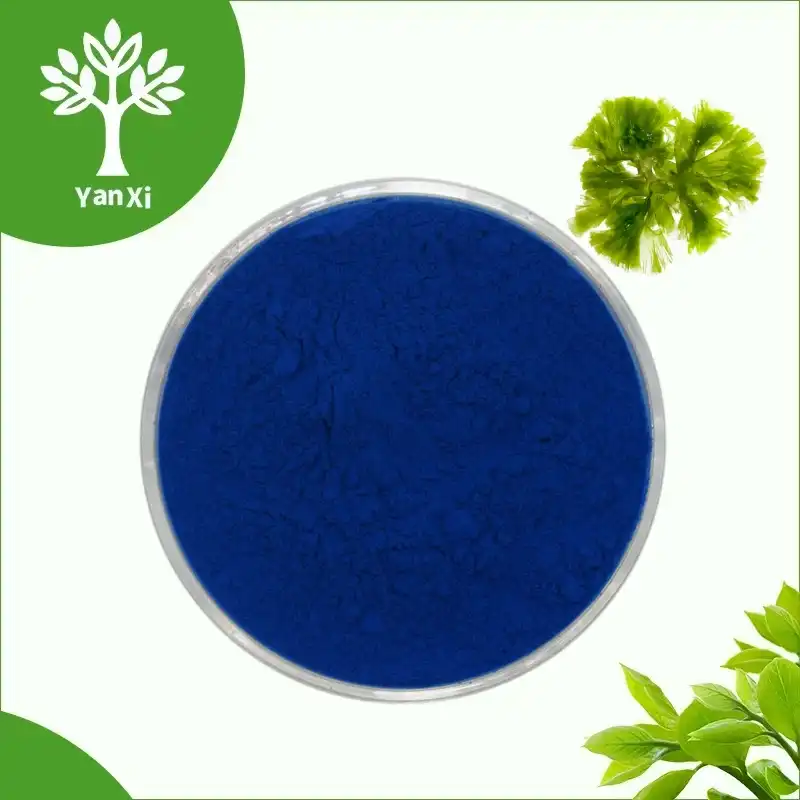
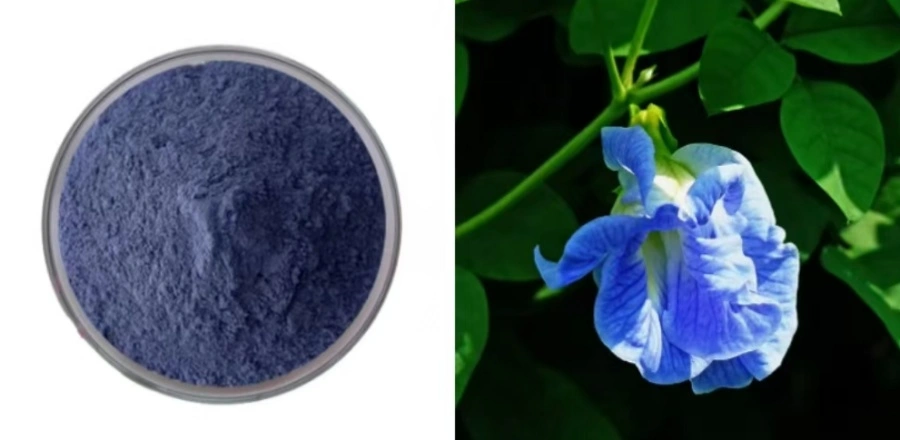
Clitoria ternatea is a climbing legume that grows naturally in tropical Asia. Butterfly Pea Flower Powder is made from the dried flowers of this plant. Anthocyanins, mostly ternatins, which are polyacylated delphinidin-based pigments, give it its blue colour. Researchers say that the pH response is clear: the colour is blue, which is close to neutral, turns purple to pink when the pH is low, and turns greenish when the pH is high. With a little lemon juice, the colour can change from blue to purple because it naturally shows what pH level the drink is at. Customers should see this behaviour as both a selling point and a formulation variable, since the final shade depends on the acid system in your drink.
Powder, Extract, and Tea: Know the Difference
Buyers often mix up the three types. Dried flowers are used to make tea. They are steeped and then strained. It is a concentrated and filtered pigment that usually has a stronger colour and needs to be labelled and handled in a different way by the government. Powder comes from grinding up the whole flower, so it has both colour and plant fibre in it. Our Butterfly Pea Flower Powder is made from 100% ground dried flower that has been sifted into a fine blue powder. It can be used in both dry blends and quick drink mixes. Before you choose between powder and extract for a clear drink, I suggest you do a dispersion test to see which one works best. Whole-flower powder may leave some insoluble plant matter in clear liquids.
Why Beverage and Functional Food Brands Want a Natural Blue?
Few natural food colours are blue, and more and more people who buy foods with clean labels look at the ingredient lists to see if they contain synthetic dyes. Butterfly pea powder is an easy-to-explain flower-based ingredient that can be used instead of FD&C Blue No. 1 in some ideas. It's also good for caffeine-free positioning, since the plant doesn't have any caffeine. This makes it good for afternoon teas, drinks for kids, and health drinks. Anthocyanins have been shown to be antioxidants in the lab, but I don't think they should be used to treat diseases without first being approved by the government. Colour additives are regulated by the FDA in the US, so make sure you know what you want to use them for before you launch.
Butterfly Pea Flower Powder Applications for Food and Beverage Manufacturers
Beverages and Ready-to-Drink Products
Most of the time, it's used for smoothies, lattes, tea, lemonades, sparkling waters, and instant drink mixes. If the lemonade is acidic, the colour changes to purple or pink. If the milk is neutral, the colour stays blue. The pH level, type of sugar, water minerals, heat treatment, light exposure, and packaging should all be checked by the developers. Minerals can change colour, and pigments can be damaged by light when they are stored in clear glass bottles. I think that for ready-to-drink formats, the final package should have an accelerated shelf-life trial. The sifted texture helps dry blends mix evenly, but you still need to measure the sedimentation in clear drinks.
Bakery, Confectionery, and Dairy
Butterfly Pea Flower Powder is used to make frostings, cakes, cookies, and macarons. It's used in yoghurt, ice cream, and milk drinks, and it's added to sweets and candy fillings by candy makers. Each grid acts in a different way. With baking soda, the pH goes up, which can make the colour more green. On the other hand, fruit toppings that are acidic can make it more purple. Because the colour dissolves in water, fat-based systems like chocolate need an emulsifier or a format that can handle oil. In many cases, it can handle heat better than spirulina blue, but baking at high temperatures for a long time can still fade the colour. Before going big, I always suggest doing small-batch tests with your real oven profile.
Dosage and Pilot Testing
Use rates of about 0.05% to 0.5% by weight for colour are common in technical sources. These rates depend on the base and the shade you want. Set it low at first and then make small changes. Set the pH of each test batch to the same level, and then put the samples next to each other where your customers can see them. On the first day, write down the colour, sedimentation, aroma, and mouthfeel. Then, do this every so often during the shelf life. At these amounts, the taste stays neutral to slightly bitter, and the main flavour generally covers it up. A short test plan that can be used again and again gives your quality team clear numbers to sign off on.
Choosing Bulk Butterfly Pea Flower Powder Over Other Colorants
Versus Blue Spirulina
Blue spirulina, which contains phycocyanin, is the most well-known natural blue colour. Phycocyanin is a protein-based colour that loses its colour at room temperature and above, usually 45°C. Butterfly pea anthocyanins can handle heat better and give brands a flower-based label story, but they change colour when the pH level changes. Butterfly pea powder is light, while spirulina can taste like the sea. Neither is a clear winner. Acidic drinks that have been pasteurised may be good for butterfly pea, and a cold application with no change in pH may be good for either. Test them both in your own product with the same amount of colour power.
Versus Matcha and Synthetic Blue
Matcha supports green, caffeinated tea ideas, while butterfly pea supports blue, caffeine-free ideas. Because of this, the two don't usually go up against each other. Because it is cheap and very stable, synthetic FD&C Blue No. 1 is now avoided by many brands that want to stick to clean label rules. There is a real trade-off: natural pigments cost more per unit of colour, change with pH, and need to be tested and recorded. Instead of price per kilogram, I think you should compare the total cost per finished dish. The cost of use may be lower for a lower-dose, high-intensity format than for a cheaper powder. The dosage data from your pilot trials will show which one it is.
How to Choose the Right Grade?
First, match the grade to your application. Instant drink mixes need a powder that is fine, sorted, and easy to spread out. For bakery lines, you need to test a sample at the temperature you use for baking. For drinks that are clear, you might need an extract instead. You can compare suppliers based on the type of plant, where it comes from, the strength of the colour, the mesh size, the maximum contaminant level, the shelf life, the minimum order quantity, and the lead time. Find out what a number on the specification sheet that says "food grade" or "premium" really means. Samples should be run at the same dose and pH level, and the results should be shared between R&D, purchasing, and quality before a bulk order is approved.
Quality, Compliance, and Risk Control for Butterfly Pea Flower Powder
Yanxi Herbs Product Specifications
This is what our Butterfly Pea Flower Powder says. The plant that provides it is Clitoria ternatea, and the dried flower is what is used. Anthocyanins are the main ingredient. The powder is blue and very fine, between 80 and 200 mesh. It all goes through an 80-mesh sieve. At least 5% is lost when it dries; the same is true for ash: 10 parts per million or less of heavy metals. The plate count is less than 1,000 cfu/g, and the counts of yeast and mould are less than 100 cfu/g. It can stay fresh for 24 months if it is sealed and stored properly. These numbers make it easy for your quality team to compare batches and check new products.
Certifications and Documentation
Most of the time, quality managers ask for paperwork first for Butterfly Pea Flower Powder. An ISO 22000, HACCP, SGS, Kosher, and Halal certificate is held by Yanxi Herbs, and this product is registered with the FDA. Before you place an order, make sure you get a copy of the specification sheet, a representative COA, microbiological and contaminant results, allergen and non-GMO statements, information about the country of origin, and storage instructions. Also, find out what claims and colour the paper supports use with the people you want to reach. The FDA only registers the facility, not the product or the way it will be used. Because of this, I suggest that your regulatory team look over the intended U.S. use, including 21 CFR 73.69 for butterfly pea flower extract.
Common Risks and How to Reduce Them
Changes in colour between lots, bad dispersion, sedimentation, weak tracking, adulteration, and mixing powder and extract are all common risks that come with bulk. The type of flower, how it is harvested, dried, ground, and stored, all have an effect on the end result. Write colour-accepted levels, test methods, and complaint processes into the buy deal to lower your risk. Don't think that whole-flower powder will dissolve all the way. Don't make claims about weight loss, detox, or antioxidants unless your regulatory review backs them up. Yanxi Herbs grows raw materials and makes products at the same time. Because of this, we support lot-level documentation that helps your team make sure that each shipment meets the agreed-upon standards.
How Yanxi Herbs Supports Bulk Butterfly Pea Flower Powder Orders?
Supply, Packaging, and Delivery
We started Yanxi Biotech in 2010 and now send natural products to more than 100 different countries and regions. We have Butterfly Pea Flower Powder in stock, and you can expect it to arrive 1–3 business days after you pay. There are different types of packaging, such as 1 kg bags, 5 kg boxes, and 25 kg drums, which can be used for pilot runs, regular production, and repackaging by distributors. With local storage in Europe and the US, customers in those areas can get their orders faster. Purchasing managers can give us forecasts and set schedules for repeat orders, which keeps the production lines running smoothly.
Customization and Technical Support
Powders are rarely bought without being checked out by R&D teams, so we back up the work being done around the sample. You can get free samples. If you tell us about your application, pH, dosage goal, processing method, and target market, we can help you with mesh size (between 80 and 200), packaging, and changes to the specifications, as well as private-label and OEM needs. We grow our own raw materials, do research and development, and make things. This means that questions about the plant, the process, or the batch records are answered by the same team. When a launch date is on your calendar, getting a response quickly is important, and we try to respond quickly to technical and documentation requests.
Recommended Procurement Process
A clear order keeps the risk low. First, send a brief that describes the product, its use, its target market, its yearly amount, any certifications that are needed, how it will be packaged, and when it will be delivered. Second, compare the sample and the documents to what you asked for. Third, do stability and pilot tests to check the dosage, colour, sedimentation, sensory results, and shelf life. Fourth, lock down the details, including the minimum order quantity (MOQ), price, payment terms, lead time, and procedures for not meeting standards. Lastly, make a long-term supply estimate and a plan for trying it on a regular basis. By following this process, the R&D, buying, and quality teams can all agree on the same material, and there won't be any shocks after the first full-scale order.
Conclusion
As a natural, caffeine-free blue colour, Butterfly Pea Flower Powder comes from dried Clitoria ternatea flowers and is used by companies that make drinks and functional foods. Because its anthocyanins change colour with pH, testing in acid, heat, light, and packaging is necessary to make sure it works. Compared to blue spirulina, matcha, and synthetic blue, it works best when the label story is about flowers and the product is caffeine-free. The price should be judged by the number of servings that are consumed. Buyers lower their risk by looking at specifications, certifications, COAs, and U.S. rules for colour additives. They can also lower their risk by setting colour tolerances ahead of time. R&D, purchasing, and quality teams all work from the same sheet of paper thanks to a structured process that goes from brief to sample, pilot trial, and specification approval.
FAQ
Is Butterfly Pea Flower Powder caffeine-free?
There is no caffeine in pure powder made from Clitoria ternatea flowers. If you want to say that a finished product is caffeine-free, check the mixes and any shared tools.
Is the powder fully soluble?
Not at all. Since the whole flower was crushed, some solid plant matter is still there. You could try dispersion in your recipe or look into an extract for drinks that are clear.
How should I store it?
Close it up and put it somewhere cool and dry, away from light and air. A sealed package kept the right way will keep food fresh for 24 months.
Can it handle heat and baking?
Yes, most of the time. But oxygen, heat, pH, and light can fade the colour. Before going big, test your own process and baking time.
Do you offer samples?
Yes, you can get free samples. Send your application information to info@yanxiherbs.com. We'll get back to you with the next steps.
Request Bulk Butterfly Pea Flower Powder Samples from Yanxi Herbs
Looking for a Butterfly Pea Flower Powder supplier that offers free samples, in-stock inventory, and delivery within 1–3 working days after payment? Yanxi Herbs holds ISO 22000, HACCP, Kosher, and Halal certifications and supports US and European warehousing. Send your application, target market, and estimated volume to info@yanxiherbs.com, and our team will reply with specifications, COAs, and pricing. Visit yanxiherbs.com for more product details.
References
1. Journal of Food Science and Technology (2021): Jeyaraj, E.J., Lim, Y.Y., and Choo, W.S. "Extraction methods of butterfly pea (Clitoria ternatea) flower and biological activities of its phytochemicals."
2. Frontiers in Plant Science (2021): Vidana Gamage, G.C., Lim, Y.Y., and Choo, W.S. "Anthocyanins from Clitoria ternatea flower: biosynthesis, extraction, stability, antioxidant activity, and applications."
3. Frontiers in Plant Science (2019): Oguis, G.K., Gilding, E.K., Jackson, M.A., and Craik, D.J. "Butterfly pea (Clitoria ternatea), a cyclotide-bearing plant with applications in agriculture and medicine."
4. Journal of Ethnopharmacology (2008): Mukherjee, P.K., et al. "The Ayurvedic medicine Clitoria ternatea: from traditional use to scientific assessment."
5. Phytochemistry (2003): Kazuma, K., Noda, N., and Suzuki, M. "Flavonoid composition related to petal color in different lines of Clitoria ternatea."
6. U.S. Food and Drug Administration, Color Additive Status List (2024).

Send Inquiry