
Chlorophyll Powder for Natural Green Coloring in Beverages, Candies, and Food Products
Nov 13, 2026
Chlorophyll Powder adds a natural green colour to drinks, candies, and other foods without using dyes. The pigment form should be matched to the product's pH, heat exposure, and shelf life. A pilot test should then be done to confirm the result. Yanxi Herbs' Alfalfa-Derived Chlorophyll Powder is a fine, dark green powder with 15% and 95% chlorophyll content. There are licenses for ISO, HACCP, FDA registration, Kosher, and Halal that come with it. This book tells you how the colour works, how to mix it, what paperwork you need, and how to pick a supplier.
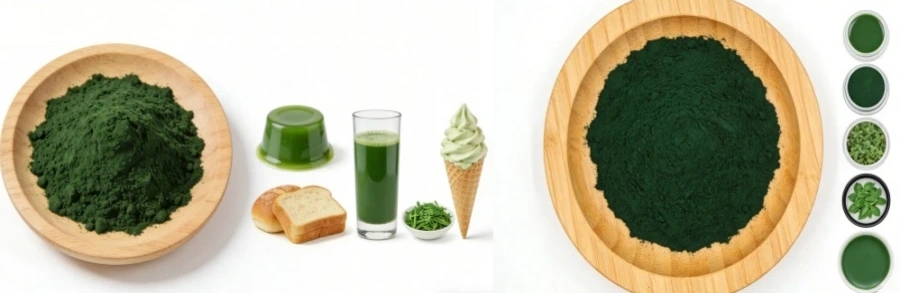
What Is Chlorophyll Powder and Why Do Manufacturers Use It for Natural Green Color?
Chlorophyll, Chlorophyllin, and Liquid Formats Explained
The green colour in plant leaves is natural chlorophyll, which has a magnesium atom in the middle of its ring shape. It breaks down into oils instead of water. Chlorophyllin is a water-soluble derivative that is made by changing the structure of that substance. Sodium copper chlorophyllin changes copper to magnesium, which makes the plant more stable. Chlorophyll products that are liquids dilute the colour with water or glycerine, but a dry powder makes it stronger. The strength of the colour, the carrier, how well they dissolve, and how they act in a finished recipe are all different. I always tell people who are buying something to look at the specification sheet and not just look at the word "chlorophyll."
Why Dry Powder Fits Clean-Label Production?
For practical reasons, a lot of food and drink teams choose dry powder. With the same amount of pigment, a powder weighs less than a liquid. This means that freight costs go down and warehouse space is used more efficiently. It is also dosed by weight, which makes sure that the same amount is used in every batch. When stored properly, our Chlorophyll Powder will last for 24 months in sealed containers. It will lose no more than 5% of its strength when it dries. It supports a plant-based chemical claim because it comes from alfalfa. Words like "organic," "non-GMO," and "food grade" are different claims, so each one needs its own paper.
How the Pigment Creates Green and What Changes the Shade?
The colour green comes from chlorophyll, which takes in red and blue light and sends back green light. The colour you see depends on the type of pigment, how much of it there is, and what else is nearby. Magnesium can leave the ring in acidic products, and the colour changes to an olive-brown shade. Rocks, oxygen, heat, and light can also dull the tone. Schwartz and von Elbe found that chlorophyll was lost when veggies were heated, which is why heat steps need to be tested. Size and spread of particles are also important, since powder that isn't spread out well leaves behind specks. Because "natural green" can't promise that every recipe will work the same, lab and pilot tests come first.
How to Use and Mix Chlorophyll Powder in Beverages, Candies, and Food Products?
Defining Your Target Before the First Trial
Write down your goal to begin. Write down the colour you want, the pH at the end, the highest temperature that can be used for processing, the shelf life, and the type of packaging. Because clear packaging lets light hit colours, it does matter. Do not guess which level to use; instead, run a low-to-high dosage series. If the chlorophyll level is 15% or 95%, the pigment strength will be different, so the same weight will not give the same colour. Before you decide on an amount, check the legal limit in your area. I also think you should make a colour reference swatch on the first day. This way, both the R&D and quality teams will have the same standard.
Mixing in Beverages and Dry Drink Powders
For drinks with liquids, mix Chlorophyll Powder with a little water that is about room temperature and stir it until it is smooth. Then add it to the main tank while keeping it moving all the time. This keeps clumps and sediment from forming. Our powder dissolves in water, which helps it spread out in mixing tanks, and it goes through an 80-mesh sieve without any problems. For colour accuracy, check it again after storage and after being pasteurised or filled hot. Light and heat can change the colour. Before adding more powder to a dry mix, mix it into a small amount of the base. Remember the pH level, because drinks that are sour might need a different type of colour.
Candies, Bakery, Sauces, and Snacks
If the process allows it, add the powder after the highest cooking temperature when making candy. This is because sugar syrups, acids, and long exposure to heat can dull the green. For sweets and hard treats, mix the powder with a little water or syrup first. To keep from getting streaks, chewing gum and coatings need to be spread out evenly. Heat from the oven and leavening agents can change the colour and pH of baked goods, so bake test pieces at the same temperature as the final goods. Snacks, desserts, and sauces all behave in different ways. I think you should only try one dose trial per type of product and never use a dose from a different formula again.
Chlorophyll Powder Ingredients, Safety, and Regulatory Checks
What Is Actually in the Powder?
Chlorophyll or chlorophyllin can be found in commercial products along with carriers, bulking agents, or anti-caking materials. The main ingredients in our Chlorophyll Powder are natural chlorophyll and magnesium chlorophyllin. The plant source is alfalfa. The nutrition facts are different for each format, serving size, and carrier. Since the amount of colouring used is usually very small, it shouldn't be sold as a real source of nutrients. Ask each supplier to give you a full list of the ingredients and carriers they use. If you want to use your formula to make a supplement or functional product, you should ask for the specification that fits that use.
Safety and Quality Data to Request
It takes less time to approve a strong data package. The specs for our Chlorophyll Powder show the following limits:
- Loss when dried: 5% or less
- Ash: 5% or less
- Heavy metals: 10 parts per million or less
- Plate count: less than 1000 cfu/g
- Mould and yeast: less than 100 cfu/g
Ask any seller for a proof of analysis for each lot, as well as comments about allergens and GMOs, pesticide and residue solvent records, and safety data sheets. These records help quality managers do audits by retailers or customers and let them compare new batches to a set standard.
US Regulation and Claim Language
In the US, the Federal Food, Drug, and Cosmetic Act says that colour additives need to be approved. The list of approved additives can be found in 21 CFR Part 73. There is a use limit for sodium copper chlorophyllin in citrus-based dry drink mixes. This means that allowed uses depend on the type of colour and the type of food. Copper complexes are called E141 in the EU, and chlorophylls are called E140. Because each product and market has its own set of rules, I suggest that your regulatory team check the status before launch. Separate claims: natural, organic, non-GMO, and food grade all need their own proof.
Chlorophyll Powder vs. Other Green Coloring and Botanical Powders
Powder vs. Liquid Chlorophyll
Liquid chlorophyll can be used right away or in small amounts, but the water or glycerine that holds it together makes it heavier and takes up more space when it's shipped. Dry Chlorophyll Powder can be used for bulk production, powdered drinks, and industrial premixes. It can be stored for up to 24 months in a sealed drum as long as the conditions are right. You can change the amount by the gram with a powder, and you can keep the same item in stock for more than one product. When I show a buyer their choices, I ask them to rate the amount of colour in each style. After that, I figure out the cost per finished unit instead of the cost per kilogram.
Powder vs. Spirulina and Wheatgrass
Powders of spirulina and wheatgrass give foods flavour, solids, nutrients, and a green colour that goes well with some health goods. If you put enough whole-plant powder into a drink to change its colour, it may also change the way it tastes and feels. Spirulina is usually a blue-green colour, which is different from the colour of leaves. Our Chlorophyll Powder doesn't leave a grassy taste in your mouth and can be used as a stable colourant in gum, drinks, and oral care products. If you want to see the whole plant on the label, pick spirulina or wheatgrass. If colour is most important, pick a green powder.
Powder vs. Copper Chlorophyllin Products
Powders of spirulina and wheatgrass give foods flavour, solids, nutrients, and a green colour that goes well with some health goods. If you put enough whole-plant powder into a drink to change its colour, it may also change the way it tastes and feels. Spirulina is usually a blue-green colour, which is different from the colour of leaves. Our Chlorophyll Powder doesn't leave a grassy taste in your mouth and can be used as a stable colourant in gum, drinks, and oral care products. If you want to see the whole plant on the label, pick spirulina or wheatgrass. If colour is most important, pick a green powder.
How to Choose, Source, and Approve Chlorophyll Powder for Commercial Manufacturing?
Selection Criteria and Mistakes to Avoid
Copper chlorophyllin products take the place of magnesium in the ring. Food manufacturers often choose them when they need stronger stability in neutral to alkaline foods. This is because magnesium-based forms may move around more easily in acidic or hot foods. Labelling and rules are a trade-off because copper complexes have their own lists, like E 141 in the EU and 21 CFR 73.125 in the US. On our product page, we list natural chlorophyll and magnesium chlorophyllin as the active ingredients. Now, take any copper product and compare it line by line to ours. Ask for the papers because similar names don't always mean the same specs.
Bulk, Wholesale, Private-Label, and OEM Options
Listings for retail supplements don't always have the specifics that an industrial plant needs. A good supplier should give you specifications, samples, export documents, and a way to track each batch. We ship our Chlorophyll Powder in 25 kg drums, 5 kg boxes, and 1 kg bags. You can get free trials; we have stock on hand, and shipping takes between one and three business days after payment. For private-label projects, agree in writing on the ingredients, labels, packaging, claims, and who will be in charge of testing. Colour concentration, particle size, dispersibility, and packaging are some of the things that OEM work can include. A quality agreement with terms for changing things protects the supply chain.
Laboratory, Pilot, and Ongoing Quality Control
Compare the colour, how it spreads, how it settles, how it reacts to pH, how it handles temperature, how stable it is in light, and how taste and smell it has at different doses in the lab. Next, make a pilot batch to make sure that the batch size, mixing time, and shear all match what you saw on the bench. Do real-time or rapid shelf-life studies on the end pack to make sure it works. Once everything is okay, make a master colour reference, ask for an analysis report with every shipment, keep samples for future use, and keep an eye on trends. When you get nonconforming lots, you need to write down a process that includes quarantine, notice, and corrective action. There are certificates for ISO 22000, HACCP, SGS, Kosher, and Halal at Yanxi Herbs.
A Five-Step Procurement Process
Compare the colour, how it spreads, how it settles, how it reacts to pH, how it handles temperature, how stable it is in light, and how taste and smell it has at different doses in the lab. Next, make a pilot batch to make sure that the batch size, mixing time, and shear all match what you saw on the bench. Do real-time or rapid shelf-life studies on the end pack to make sure it works. Once everything is okay, make a master colour reference, ask for an analysis report with every shipment, keep samples for future use, and keep an eye on trends. When you get nonconforming lots, you need to write down a process that includes quarantine, notice, and corrective action. There are certificates for ISO 22000, HACCP, SGS, Kosher, and Halal at Yanxi Herbs.
Conclusion
Chlorophyll Powder can add a natural green colour to drinks, sweets, baked goods, and dry mixes, but the results rely on the type of pigment used and how it is mixed with the food. Copper-based products, chlorophyll, and chlorophyllin are not all soluble, stable, or labelled the same way. Also, pH, heat, light, and oxygen can change the colour. Colour stays the same thanks to careful mixing, low-to-high dosage trials, and pilot validation. Specifications, certificates of analysis, and rules for colour additives that are specific to each market help with compliance. If colour is the main goal, a dry powder is better for storage and dosing than liquid chlorophyll, spirulina, and wheatgrass. Customers who look at different prices, try using the real recipe, and agree on quality standards are less likely to have batches refused.
FAQ
Is Chlorophyll Powder suitable for beverages and candies?
As long as the pigment form is right for the pH, heat, and shelf life of the item in question, the answer is yes. Before you finalise the specification, you should do some test runs.
What is the difference between chlorophyll and chlorophyllin?
Chlorophyll is the natural colour of leaves that dissolves in oil. Based on the fact that chlorophyllin is a water-soluble derivative, it acts differently in fats and drinks.
Does organic certification mean stronger color?
No, the term "organic" only refers to growing and treatment, not the strength of the colour. Separately, compare the test results and the concentration.
What documents should I request?
Request the list of requirements, an analysis certificate, a safety data sheet, allergen and GMO statements, microbiological and heavy metal reports, as well as certificates for the market you want to sell to.
Do you offer samples and private-label support?
Yes. You can get free samples, and we work with OEM and private-label projects.
Request Chlorophyll Powder Samples and a Commercial Quote from Yanxi Herbs
Yanxi Herbs is an experienced Chlorophyll Powder supplier offering free samples, 15% and 95% chlorophyll specifications, and in-stock supply. Our team provides COAs, export documents, and local warehousing in Europe and the US. Send your application, target shade, annual volume, packaging format, processing conditions, and destination market to info@yanxiherbs.com, and we will recommend a specification and prepare your quote. Visit yanxiherbs.com for details.
References
1. U.S. Food and Drug Administration, Code of Federal Regulations Title 21, Part 73: Listing of Color Additives Exempt From Certification, 2023
2. Journal of Food Science, Kinetics of Chlorophyll Degradation to Pyropheophytin in Vegetables, 1983
3. EFSA Journal, Scientific Opinion on the Re-evaluation of Chlorophylls and Chlorophyllins as Food Additives, 2015
4. Annual Review of Food Science and Technology, Natural Colorants: Food Colorants from Natural Sources, 2017
5. Quality Assurance and Safety of Crops & Foods, Emerging and Persistent Issues with Artificial Food Colours: Natural Colour Additives as Alternatives to Synthetic Colours in Food and Drink, 2011
6. CRC Press, Natural Colorants for Food and Nutraceutical Uses, 2003

Send Inquiry
Related Industry Knowledge
- Nitric Oxide Rich Beet Powder For Pre-Workout Smoothies
- What Makes Butterfly Pea Flower Extract Powder Ideal for Clean Label Food and Drink Applications?
- Why Do Beverage Manufacturers Choose Bulk Phycocyanin Powder for Blue Color Solutions?
- Freeze-Dried Lemon Powder Provides Convenient Citrus Flavor Solutions for Beverage and Bakery Applications