
Butterfly Pea Flower Powder Delivers Plant-Based Blue Color For Beverage And Food Innovation
Aug 11, 2026
Butterfly Pea Flower Powder has emerged as a game-changing natural colorant for food and beverage manufacturers seeking clean-label solutions. Derived from Clitoria ternatea flowers, this vivid blue botanical ingredient addresses the growing consumer demand for plant-based alternatives to synthetic dyes. Its unique pH-sensitive pigments shift from deep blue to purple and pink, unlocking creative formulation possibilities across beverages, confectionery, dairy products, and functional foods. With robust thermal stability and exceptional water solubility, this ingredient enables brands to differentiate their products while meeting regulatory standards and sustainability expectations.
Understanding Butterfly Pea Flower Powder: Composition and Health Benefits
Botanical Origin and Processing Standards
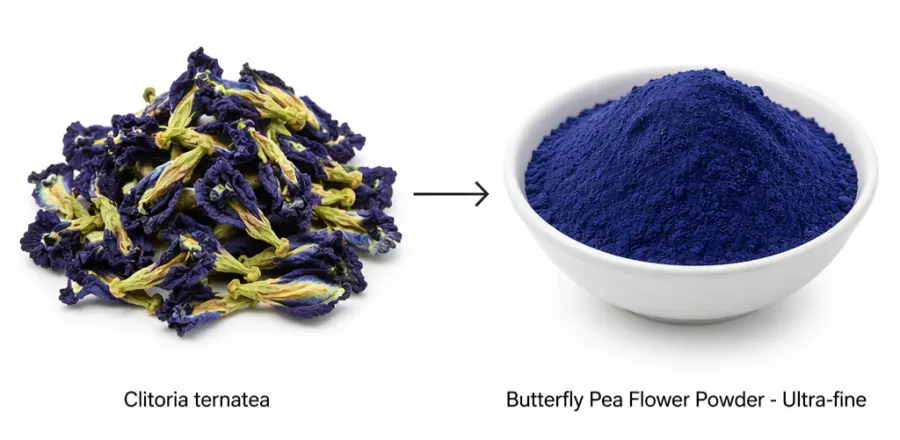
Our Butterfly Pea Flower Powder comes from Clitoria ternatea, a tropical legume that is grown in controlled conditions to make sure the quality is always the same. In the manufacturing process, the flowers are dried at the right temperature and then ground into a fine powder that has a mesh size of 80 to 200. This range of particle sizes ensures that the material will dissolve completely in water without settling, which is very important for clear drinking uses. The powder stays dry (less than 5% moisture) and ashy (less than 5% ash), so the bright blue anthocyanin pigments stay the same over the 24-month shelf life as long as it is stored properly.
Nutritional Profile and Active Components
Ternatins are the main active ingredients. They are a special group of acylated delphinidin-type anthocyanins that are more stable than other plant colors. The antioxidant power of these compounds is measured by their ORAC numbers, and they have useful effects beyond how they look. The powder doesn't have any added chemicals, so it can be used in clean-label products that appeal to health-conscious customers. Butterfly Pea Flower Powder has a neutral, slightly earthy taste that works well with complex flavor systems, unlike spirulina-based blues that can add off-flavors.
pH-Sensitive Color Transformation Mechanism
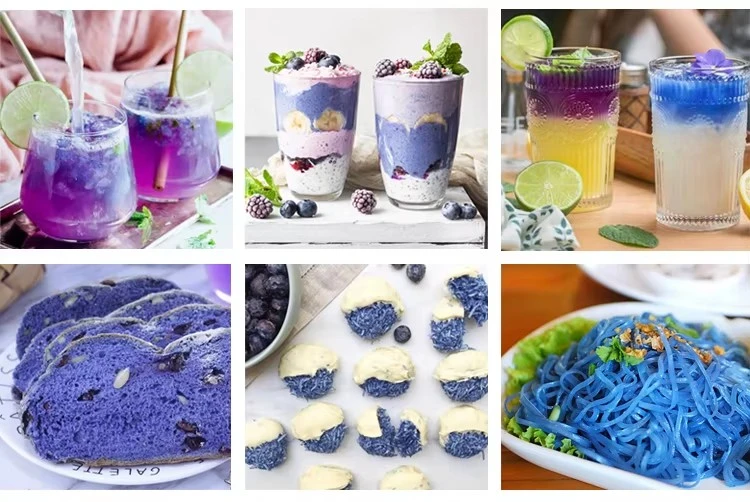
This ingredient is unique in the market for natural colorants because it can change colors in amazing ways. The powder has a royal blue color when the pH level is normal (6.0 to 7.0). This makes it perfect for sports drinks and functional waters. When made in acidic settings below pH 4.0, like lemonades or fruit-flavored drinks, the color changes to shades of pink and purple. When the neutral pH level rises above 8.0, the pigment changes color to green. This gives product designers visual engineering options that have never been seen before. This pH-responsive behavior makes it possible to make colored drinks that give customers unique experiences.
Application and Innovation: Using Butterfly Pea Flower Powder in Food and Beverage Industries
Beverage Formulation Techniques
Manufacturers of drinks have successfully added this natural blue colorant to a wide range of products. Use rates for ready-to-drink teas and infused waters are usually between 0.05% and 0.2%, depending on how strong a color you want. The powder mixes quickly in both hot and cold water and doesn't need any extra solubilizers, which makes the production process easier. Energy drink companies use the bright blue color to show that their drinks are better for you than artificial ones, and smoothie companies mix it with citrus ingredients to make eye-catching color patterns that look good in photos for social media marketing.
Bakery and Confectionery Applications
The anthocyanins in Butterfly Pea Flower Powder can survive temperatures above 100°C, which makes them a good addition for baking. Cake makers can make beautiful blue frostings and cakes without using synthetic Blue No. 1. This meets the clean-label standards for specialty retail outlets. The powder is used by candy makers to make gummies, hard sweets, and chocolate coats. The color doesn't change when the milk is pasteurized, so it can be used in shelf-stable dairy products like yogurt drinks and flavored milk. One bakery chain in Europe saw a 30% rise in sales after using this plant ingredient to naturally color blue cookies.
Quality Assurance in Product Development
For integration to work, strict quality control rules must be followed. HPTLC fingerprinting proves the botanical identification and rules out using cheaper sources of anthocyanin, like grape skin extracts, to make the product look like something else. Microbiological requirements include a Total Plate Count of less than 1,000 CFU/g and Yeast and Mold counts of less than 100 CFU/g, with negative results for pathogens like Salmonella and E. coli. GC-MS/LC-MS multi-residue pesticide screening makes sure that the product meets USDA organic standards or EU maximum residue limits. These quality standards protect the image of brands and make sure that they follow the rules in all global markets.
Comparing Butterfly Pea Flower Powder: Brands, Quality, and Market Options
Organic Versus Conventional Sourcing
When it comes to strategy, procurement teams have to choose between organically approved Butterfly Pea Flower Powder and regular Butterfly Pea Flower Powder. Organic certification comes with higher costs, but it's in line with what people expect from natural food stores and lets you make certain marketing claims. Options that are more common are cheaper for mass-market uses and still give the same color performance and steadiness. Sourcing decisions affect not only the cost of the ingredients, but also how the brand is positioned and how the target customers see it. Manufacturers who sell to health food stores usually choose organic certification, while manufacturers who sell to regular grocery stores may choose non-GMO standard grades.
Powder Versus Extract Formats
There are both straight powder and concentrated extract formats on the market. The natural amount of anthocyanins in standard powder comes from the dried flowers and is usually between 5 and 10 percent of the total anthocyanin content. Concentrated extracts have more pigment, so they need to be used less often, but they cost more per kilogram. Powder forms work better in dry mixes and baking uses, while extracts work best in liquid mixtures that only need small amounts of additions. When choosing the best format for an application, it's better to look at the cost-in-use rather than the price of the raw materials.
Criteria for Evaluating Suppliers
To find a trustworthy Butterfly Pea Flower Powder provider, you need to look at them from a lot of different angles. As part of quality assurance, companies should have their own testing labs that are certified by ISO 17025 and can do name checks, heavy metal analyses using ICP-MS, and microbial screens. Transparency in the supply chain about growing areas and handling methods shows that the provider is knowledgeable. With private label capabilities, brands can make their own formulas that meet specific needs. Long-term partnerships work best when suppliers answer technical questions, help with formulation, and keep extra stock on hand in case production is interrupted.
Procurement Guide: How to Buy Butterfly Pea Flower Powder for Bulk and Wholesale
Specification Alignment and Packaging Choices
Technical specifications that are well-defined are the first step in professional procurement. Our standard Butterfly Pea Flower Powder has particles that are between 80 and 200 mesh and looks like a fine blue powder. The main active ingredient is anthocyanins, and heavy metals are strictly limited to 10 parts per million (ppm) and 5% loss during drying. For trial production, 1 kg foil bags are used, 5 kg boxes are used for small batches, and 25 kg fiber drums are used for large-scale activities. Each type of packaging has a desiccant and double-sealed protection to keep the food fresh while it's being shipped and stored. Before agreeing to large sales, R&D teams can try the stability and formulation of free samples.
Certification Requirements for Global Markets
Global companies that make food and drinks need a lot of licensing paperwork. ISO 22000 and HACCP certifications show that a food safety management system is following the rules. Kosher and Halal licenses make it easier for certain types of customers and areas to get into the market. Getting registered with the FDA gives U.S. importers peace of mind, and following EU Novel Food rules lets products enter the European market. Quality managers can compare specifications to purchase agreements by getting Certificate of Analysis documents for each batch of production. These approvals lower the risk of regulatory action and speed up the process of clearing foreign shipments through customs.
Logistics and Supply Chain Considerations
Reliable delivery performance is what sets great suppliers apart from average ones. Our in-stock merchandise lets us ship within one to three business days of receiving payment confirmation. This keeps production delays to a minimum for product launches that need to happen quickly. Knowing how long it takes to make something to order helps buying teams figure out how much material to keep on hand. Temperature-controlled shipping keeps the quality of goods safe while they're in transit, especially when they're being sent to warm places. For customers in Europe and North America, local warehouses help cut down on shipping times and freight costs. Setting minimum order quantities and pricing tiers for large orders helps buyers get the best deals on goods while keeping an eye on their working capital needs.
Future Trends and Sustainability in Butterfly Pea Flower Powder
Regulatory Drivers for Natural Colorants
Regulatory environments are becoming more and more favorable to botanical colorants over synthetic ones. The strict rules the European Union has put on fake food dyes have sped up efforts by global brands to change their recipes. Proposition 65 in California makes people more aware of synthetic colorants that contain heavy metals, which increases the demand for better natural choices. As rules get stricter around the world, producers who change formulations before the dates set by regulators gain a competitive edge. There are supply problems in the natural blue pigment category because demand is higher than production capacity. This means that early partnerships with suppliers are highly important.
Sustainable Ways to Grow and Process Food
Along with quality and price, environmental responsibility has become an important factor in the buying process. Crop rotation techniques used for sustainable Butterfly Pea Flower Powder farming improve soil health and lower the need for synthetic fertilizers. Processing methods that use less water leave less of an impact on the earth during extraction and drying. Solar-powered factories show that they are serious about using green energy. Suppliers who use tracking systems from the field to the finished product make things clear, which helps companies with their social responsibility reporting. These sustainability credentials are becoming more and more important to brands that want to attract environmentally conscious customers.
Innovation Investment and Market Positioning
Forward-thinking producers see using Butterfly Pea Flower Powder as an investment in new ideas rather than a cost problem. pH-responsive blue pigments make things look different, which makes moments that people want to share on social media and raises awareness of a brand. Retailers get excited when limited-edition products with color-changing effects come out, and customers try them out. As plant-based eating continues to become more popular, botanically-based ingredients help product lines keep up with overall consumer trends. Strategic partnerships with natural ingredient suppliers with a lot of experience shorten the time it takes to bring new ideas to market. These partnerships also help reduce technical risk by providing formulation expertise and application support.
Conclusion
Butterfly Pea Flower Powder represents a transformative solution for food and drink companies that are making the switch to clean-label formulas. Its excellent color stability, pH-responsive versatility, and botanical credentials meet a number of buying goals, such as meeting regulations, meeting customer preferences, and making the product stand out. For execution to go well, you need to work with providers who can show they have the technical know-how, quality control, and effective logistics. This botanical colorant is a smart investment for brands that want to stay ahead in markets that are changing because it meets regulatory requirements, consumer demands for natural ingredients, and expectations for sustainability.
FAQ
What makes butterfly pea flower powder stable in food manufacturing?
The powder contains ternatins, which are special acylated Butterfly Pea Flower Powder anthocyanins that don't break down at temperatures up to 100°C. This means that the color stays the same during processing and baking. Compared to non-acylated anthocyanins found in other plants, its chemical structure makes it more stable.
How does particle size affect application performance?
Specifications ranging from 80 to 200 mesh guarantee full spread in water-based systems without sedimentation. Smaller particles dissolve better in cold drinks, while larger grades work better for dry mix uses that need controlled release during recovery.
Can this ingredient replace synthetic Blue 1 in existing formulations?
Yes, but the rates of use usually need to be changed because different tinctures have different strengths. Bench tests find the best dose, and pH buffers may be needed to keep the color you want in acidic mixtures where manmade blues stay stable but natural anthocyanins shift toward purple.
What shelf life can manufacturers expect?
Powder that is stored correctly will keep its color for 24 months if it is packed up and kept in a cool, dry place below 25°C. Anthocyanin breaks down quickly when it comes in contact with light, water, and air. This is why proper packing is so important for keeping quality throughout the supply chain.
Partner with Yanxi Herbs for Premium Butterfly Pea Flower Powder Supply
Yanxi Herbs is a reliable company that has been making plant ingredients for more than ten years. They make Butterfly Pea Flower Powder. We follow strict quality control procedures to make sure that every batch meets the ISO 22000, HACCP, Kosher, and Halal standards needed to sell on the global market. Our streamlined supply chain, which includes both our own farming and modern processing facilities, makes sure that we always meet your needs and offer reasonable prices. Because we have warehouses in both Europe and the US, we can send within one to three business days to meet your production needs. Our expert team can help you with formulation so that the color works best in your unique uses. You can get free samples and talk about your Butterfly Pea Flower Powder needs by emailing us at info@yanxiherbs.com. Let us help you turn your goals for product innovation into solutions that are ready for the market.
References
1. Journal of Food Science and Technology, "Stability and Application of Natural Anthocyanin Colorants in Beverage Systems," 2022.
2. International Food Ingredients Association, "Global Market Analysis of Plant-Based Colorants in Food Manufacturing," 2023.
3. Food Chemistry Research, "Characterization of Ternatins from Clitoria ternatea: Structure and Thermal Stability," 2021.
4. Natural Product Communications, "Comparative Analysis of Botanical Blue Pigments for Clean-Label Applications," 2023.
5. Regulatory Affairs Journal, "Global Compliance Standards for Natural Colorants in Food and Beverage Products," 2022.
6. Sustainable Agriculture Review, "Environmental Impact Assessment of Botanical Ingredient Cultivation and Processing," 2023.

Send Inquiry
Related Industry Knowledge
- Bulk Phycocyanin Powder Supports Stable Natural Blue Coloring For Food And Beverage Production
- How Does Freeze-dried Dragon Fruit Powder Improve Natural Color In Food Applications?
- How Can Purple Yam Powder Enhance Color and Texture in Food Product Development?
- Butterfly Pea Flower Powder Delivers Plant-Based Blue Color For Beverage And Food Innovation
_1787033972542.webp)