
Copper Peptide Powder Enables Advanced Skincare Formulas for Firming Creams and Repair-Focused Products
Sep 30, 2026
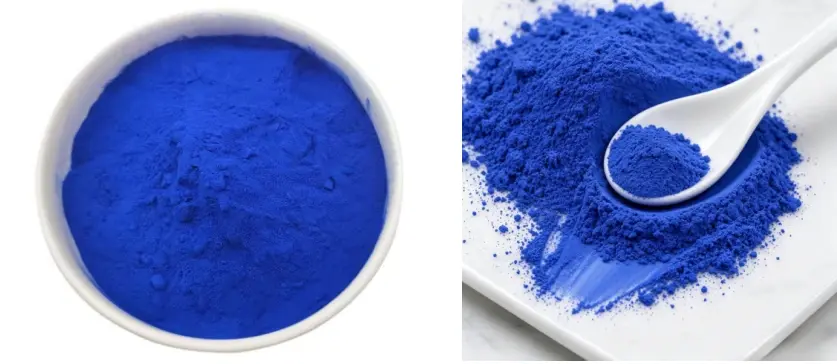
Copper peptide powder has become one of the most sought-after bioactive ingredients in professional skincare formulation. Known scientifically as GHK-Cu (Glycyl-L-Histidyl-L-Lysine Copper), this fine blue powder is a bio-identical signal peptide that naturally occurs in human plasma. For formulators, OEM manufacturers, and procurement teams building firming creams or post-procedure repair products, GHK-Cu offers a scientifically validated path to visible anti-aging performance. Its ability to stimulate collagen production and support tissue regeneration at the cellular level makes it a high-priority ingredient for brands targeting efficacy-driven skincare markets.
Understanding Copper Peptide Powder and Its Mechanism in Skincare
Before getting a lot of a bioactive ingredient, it's helpful to know what it is you're getting and why purity is so important in formulation.
Chemical Structure and Identity
The molecular formula for GHK-Cu is C₁H₂CuN₆O₄, and its molecular weight is about 403.9 g/mol. The unique blue color comes from the tripeptide chain chelating with a copper ion 1:1. The amount of copper in high-quality material is usually between 11.1% and 12.5%. If this amount isn't followed, it means that something is broken down or dirty, which directly hurts bioactivity.
Bioactive Mechanism: How It Works in Skin
This molecule, GHK-Cu, sends signals to fibroblasts and starts the production of Type I collagen and glycosaminoglycan. A study in the Journal of Aging Research (Pickart et al., 2015) showed that GHK-Cu encourages reshaping of the extracellular matrix (ECM) and greatly lowers oxidative skin damage. This makes it especially good for use in firming creams that target loose skin and repair products that are used after medical treatments.
Purity Standards That Impact Formulation Outcomes
The purchasing teams should say that the purity must be at least 98% by HPLC. ICH Q3C rules must be followed for residual liquids like acetonitrile. The amount of acetate should stay below 15% to keep discomfort to a minimum. These rules must be followed by all brands that want to get into the competitive anti-aging or medical esthetics markets.
Comparing Copper Peptide Powder to Other Active Ingredients
Procurement managers often ask: Why should I pick GHK-Cu over retinol or vitamin C when there are so many other options? The answer lies in both achievement data and how well the idea works in real life.
GHK-Cu vs. Retinol and Vitamin C
Retinol works, but it often makes skin sensitive and irritated, which means it can't be used in goods made for skin that is reacting or has recently had surgery. Vitamin C, L-ascorbic acid, is very unstable in water and easily oxidizes. It also reacts negatively with GHK-Cu, so they can't be mixed in the same step of the formulation process. On the other hand, Copper Peptide powder GHK-Cu is safe for sensitive skin because it doesn't irritate it and stays stable in a pH range of 5.5 to 7.5.
Sourcing Powder vs. Finished Serum
For business-to-business buyers, getting copper peptide in powder form is clearly better than buying serums that are already made. Powder form lets you precisely dose, keep it for longer, and have full control over how it's made. It also lowers the cost per unit when buying in bulk, which is important for OEMs that make a lot of products. Finished serums are easier to use, but they can't be customized and cost more when they land.
What to Look for When Selecting a Supplier?
When looking for a copper peptide ingredient source, there are three things that always tell you which ones are trusted and which ones aren't. First, HPLC was used to confirm purity, and AAS or ICP-OES testing was used to confirm copper levels. Second, proof that the solvents that are still present meet ICH standards. Third, batch-to-batch consistency data backed by a formal COA (Certificate of Analysis). These standards protect the integrity of your formulation and the reputation of your brand.
Formulating with Copper Peptide Powder for Firming and Repair Creams
It's easy to make things with GHK-Cu as long as you follow a few key rules that keep the stability and bioactivity of the compound.
Recommended Concentration and pH Range
Finished skin care products usually have a usable concentration of 0.1% to 0.5% by weight. 0.2% to 0.3% is a good range for firming creams. The pH of the formulation system needs to stay between 5.5 and 6.5. When the pH drops below 5.0, the copper-peptide complex breaks apart. This makes the color fade, and the product no longer works.
Stability Considerations and Formulation Best Practices
GHK-Cu dissolves in water and should be mixed with water at or below 40°C. It shouldn't be mixed with strong chelating agents like EDTA because they will compete for the copper ion. To keep cream bases from precipitating, non-ionic emulsifiers are better. A lot of research and development teams now use buffered water systems with pre-dissolved GHK-Cu solutions to make sure the solutions are spread out evenly before they are mixed into emulsions.
Regulatory and Safety Compliance
The EU Cosmetics Regulation (EC) No 1223/2009 says that GHK-Cu is safe for use in cosmetics, and the FDA's cosmetic standards say that it is also widely accepted in the US market. Formulators should keep all the paperwork that shows where the ingredients came from and make sure that the amount of copper in the formula is safe for topical use. Brands that want to sell their products in other countries should get their ingredients from sellers who are ISO 22000, HACCP, or SGS approved.
Procurement and Supply Chain Insights for Copper Peptide Powder
For purchasing managers in charge of long-term production runs, the dependability of the supply chain is just as important as the quality of the ingredients.
Identifying a Trustworthy GHK-Cu Supplier
Copper Peptide powder from a reliable supplier should come with full scientific paperwork, like a COA, an MSDS, and test results from a third party, with every shipment. Certifications like ISO 22000, HACCP, Kosher, and Halal show that production methods meet global standards for quality and food safety, even when products are used in cosmetics. Lead time risk is greatly reduced when suppliers have a history of exporting and local storage in the US or Europe.
Pricing, Volume Discounts, and Logistics
The price of GHK-Cu depends on how hard it is to make and how much the raw materials cost. Volume pricing systems make it possible for mid-sized OEM makers to buy in bulk at standard amounts. International buyers should make sure that the supplier takes care of export paperwork, customs classification, and coordinating freight. These services make it easier for buying teams to meet production deadlines and make routine tasks easier.
Value-Added Services for OEMs and Distributors
Some companies that sell Copper Peptide powder offer private label manufacturing, unique concentration specs, and help with formulating. These services help distributors make unique product lines without having to spend money on their own R&D infrastructure. Brands can also keep costs down by using subscription-based supply programs that work with different production cycles.
Verified Performance of GHK-Cu in Firming and Repair Products
Real-world recipe results give purchasing teams the peace of mind they need to use a new element on a large scale.
Clinical Evidence Supporting Efficacy
A double-blind clinical study released in the Archives of Dermatological Research in 2000 showed that using topical GHK-Cu mixtures for 12 weeks made skin much denser and thicker. Tests using fibroblasts have also shown that GHK-Cu works better than Vitamin C in some collagen induction tests, especially when the conditions are like those found in older skin.
Post-Procedure and Medical Aesthetics Applications
GHK-Cu serums are used after fractional laser and chemical peel treatments in medical esthetics settings. Clinical teams say it changes inflammatory cytokines and speeds up re-epithelialization, which makes recovery time shorter. Because of these results, dermatologist centers that are looking for actives for post-treatment care kits like to use this ingredient.
Formulator and Brand Feedback
The tolerance profile of GHK-Cu is always brought up by R&D managers at skincare brands in the US and Europe as a reason to include it in lines for firming sensitive skin. Unlike more aggressive actives, it supports measured firmness gains without needing healing times between applications. This directly leads to a better experience for the end user and higher rates of return purchases.
Conclusion
There's a good reason why GHK-Cu stands out in the age ingredient market. Its ability to support tissue repair, boost collagen production, and work well with sensitive skin makes it a useful ingredient for firming creams and recovery products after surgery. It's important for buying teams to find a Copper Peptide powder provider whose purity has been checked, who has all the paperwork they need, and who can make enough to support long-term supply deals. The difference between average goods and market winners is how well the ingredients match the brand's positioning.
FAQ
Is GHK-Cu safe for all skin types?
Yes, GHK-Cu is biocompatible and usually well accepted by all skin types, even skin that is sensitive or has just had surgery. At concentrations used in everyday life (0.1% to 0.5%), it does not cause inflammation.
How should copper peptide powder be stored?
Keep the powder away from light and moisture at 2–8°C in containers that won't let air in. If you don't store it right, water can clump together and break apart the copper-peptide complex, which makes it less effective.
Can I combine GHK-Cu with retinol in one formula?
Yes, but you need to be very careful with the pH. In well-buffered forms, GHK-Cu and retinol can be used together. But they shouldn't be mixed with L-ascorbic acid at the same time.
How do I confirm copper content in a batch?
Atomic Absorption Spectroscopy (AAS) or ICP-OES should be used to check the copper level. Suppliers with a good reputation put this information in their COA for every batch that is shipped.
What purity level should I specify for professional skincare use?
For cosmetic-grade GHK-Cu, the purity must be at least 98% by HPLC. Before accepting a new provider, make sure that the residual solvents follow the rules set by ICH Q3C.
Partner with Yanxi Herbs for Premium Copper Peptide Powder Supply
Since 2010, Yanxi Herbs has sold high-quality cosmetic products to well-known names around the world. With ISO 22000, HACCP, Kosher, and Halal standards, we are a reliable Copper Peptide powder source that works with OEMs, skincare brands, and wholesalers in more than 100 countries. Today, ask for a sample of the product, detailed information, or prices for buying in bulk. To start your question, you can email our team at info@yanxiherbs.com or go to yanxiherbs.com.
References
1. Pickart, L., & Margolina, A. (2018). Rejuvenating Skin Care Actives: From the Lab to the Clinic. Cosmetics Journal.
2. Pickart, L., Vasquez-Soltero, J. M., & Margolina, A. (2015). GHK Peptide as a Natural Modulator of Multiple Cellular Pathways in Skin Regeneration. BioMed Research International.
3. Finkley, M. B., Appa, Y., & Bhandarkar, S. (2000). Copper Peptide and Skin. Archives of Dermatological Research.
4. Gorouhi, F., & Maibach, H. I. (2009). Role of Topical Peptides in Preventing or Treating Aged Skin. International Journal of Cosmetic Science.
5. Schagen, S. K. (2017). Topical Peptide Treatments with Effective Anti-Aging Results. Cosmetics Journal.
6. Kogan, S., Sood, A., & Garnick, M. S. (2017). Copper Deficiency and the Skin. Journal of Drugs in Dermatology.

Send Inquiry
Related Industry Knowledge
- Bulk Phycocyanin Powder Supports Stable Natural Blue Coloring For Food And Beverage Production
- How Can Purple Yam Powder Enhance Color and Texture in Food Product Development?
- Chlorophyll Powder Offers Stable Plant-Based Coloring Options For Food And Beverage Manufacturers
- Freeze-Dried Lemon Powder Helps Brands Develop Natural Citrus Products with Extended Storage Flexibility
_1787033972542.webp)